
Qvintip® - enabling scalable HPV screening
A clinically validated self-sampling device designed for public health implementation at scale.
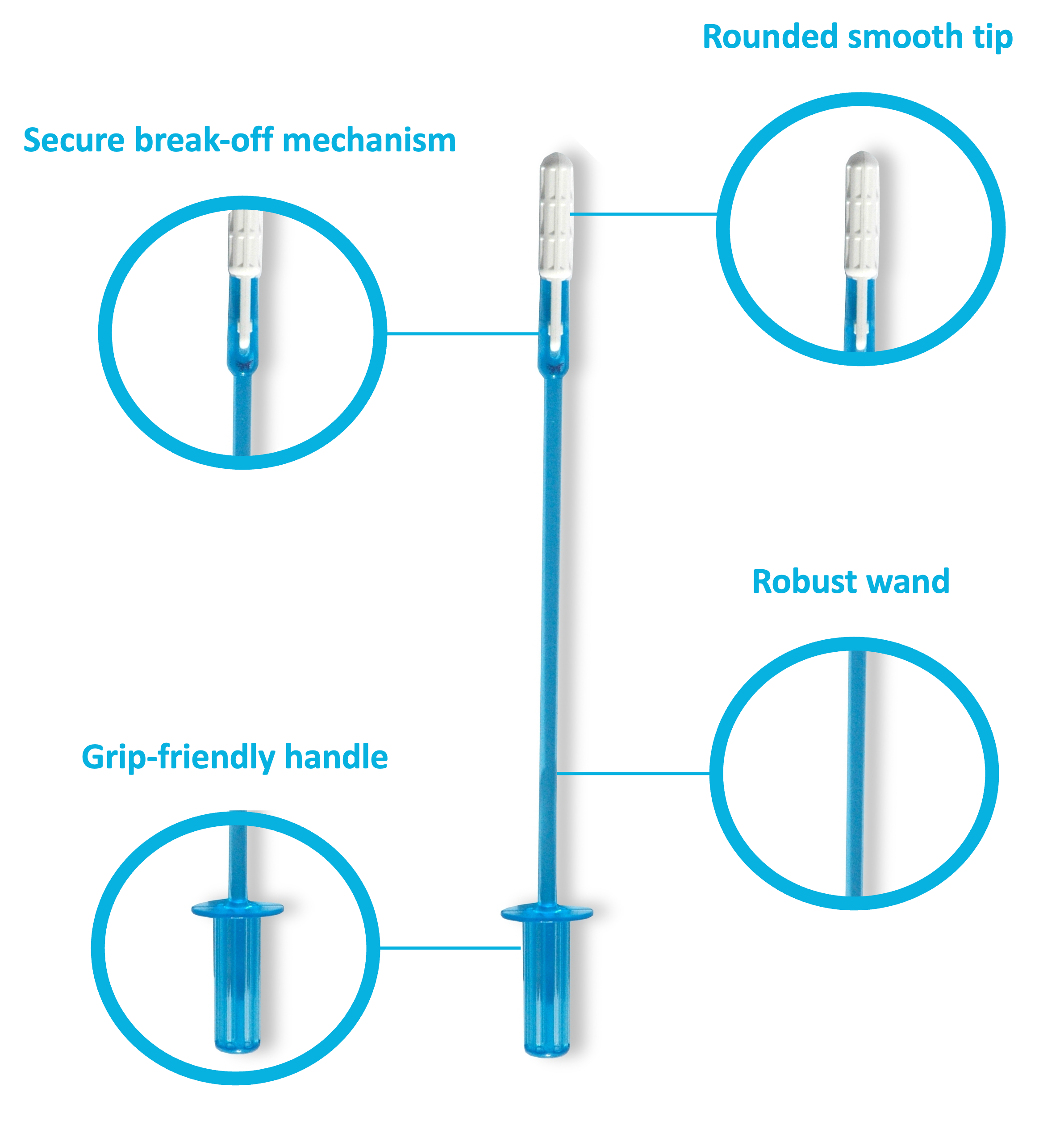
Qvintip® is a clinically validated, single-use self-sampling device that allows women to collect cervical and vaginal samples comfortably and safely for HPV testing.
The device features a detachable tip for secure transfer of the collected sample to a laboratory for analysis. Qvintip is a Swedish innovation, protected by patents and trademarked, with more than 20 years of clinical evaluation supporting its performance.
✔ Easy to use, highly acceptable
Simple, non-invasive self-collection that increases screening participation.
✔ Clinically validated performance
High sensitivity and specificity across leading PCR-based HPV assays.
✔ Regulatory ready
CE-marked, IVDR Class A, ISO 13485 certified.
✔ Built for scale
Dry transport, stable at room temperature for ≥30 days, 5-year shelf life.
✔ Adapted for low-resource settings
No electricity required, simple visual instructions, suitable for decentralized and home-based programs.


Self-Sampling Step-by-Step
Clinically validated since 2007. Supported by the latest 2025 research.
Grounded in nearly 20 years of scientific evidence demonstrating reliability, usability, and clinical performance.
-
95% found Qvintip® easy to use. Self-sampling was reported as simple and comfortable by the vast majority of participants.
— Fernandes, Shalini et al., 2025
-
HPV self-sampling increased participation among under-screened women, while effectively identifying hr-HPV and cervical lesions - with 92% attending follow-up care.
— Pereira et al., 2024
-
Screening with Qvintip is cost-effective for population-based cervical cancer prevention with the potential to improve health benefits to a lower cost than HPV reflex, conventional cytologi and repeat Pap smear.
— Professor Sonia Andersson, Karolinska Institute, Sweden